

The Exoarchaeologist’s Field Guide
to Lunar Mission Photography
By Allan Sturm
The Exoarchaeologist’s Field Guide to Lunar Mission Photography aims to correct the longstanding absence of structured, science-based inquiry into the search for extraterrestrial artifacts by serving as a catalyst for fresh new conversations in the search for physical evidence of non-human intelligence activity in our solar system — without the need for conspiracies or government coverups to drive the conversation.
For more than four decades, structured inquiry into the Search for Extraterrestrial Artifacts (SETA) has remained largely absent from serious scientific discourse. The field guide reintroduces the spirit of open inquiry with a disciplined, science-based methodology grounded in careful visual judgment.
It defines a structured, science-based framework for examining lunar mission photography for evidence of extraterrestrial artifacts. It neither defends existing assumptions nor advances pre-established conspiracy claims, focusing instead on disciplined visual analysis, shared analytic language, and science-backed methods designed to improve perception and reduce pareidolia.
Drawing from WWII aerial photo interpretation, aerial archaeology, and modern digital imaging practices, the field guide establishes an entirely new set of workflows designed to aid the analyst in the identification of anomalous decameter- and kilometer-scale geometric structures and modified terrain. These methods are illustrated using Arizona State University’s high-resolution digital scans of NASA’s lunar mission photography, many of which resolve detail at or beyond the resolution of the original film grain.
The front half of the guide (Chapters 1–10) is highly detailed and beautifully illustrated, spanning over 200 pages and featuring 422 illustrations covering humanity’s story of life on the Moon, a visual primer of common geological features, an overview of lunar mission photography, how to get started in anomaly detection, the fundamentals of anomaly detection, image selection and preparation, identification and description of Areas of Interest (AOI) and Objects of Interest (OOI), perception-enhancement techniques, best practices when working with candidate anomalies, and how to be your own worst critic before socializing your research.
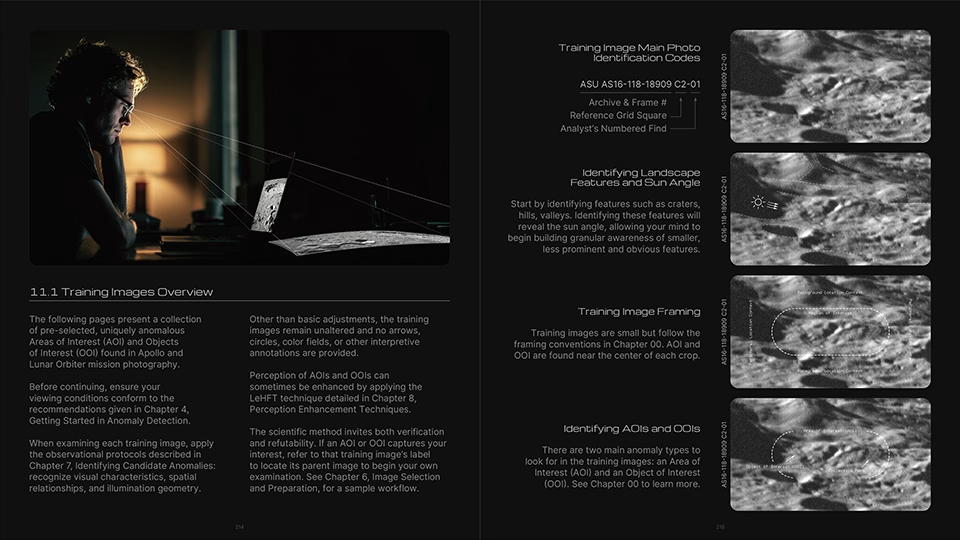
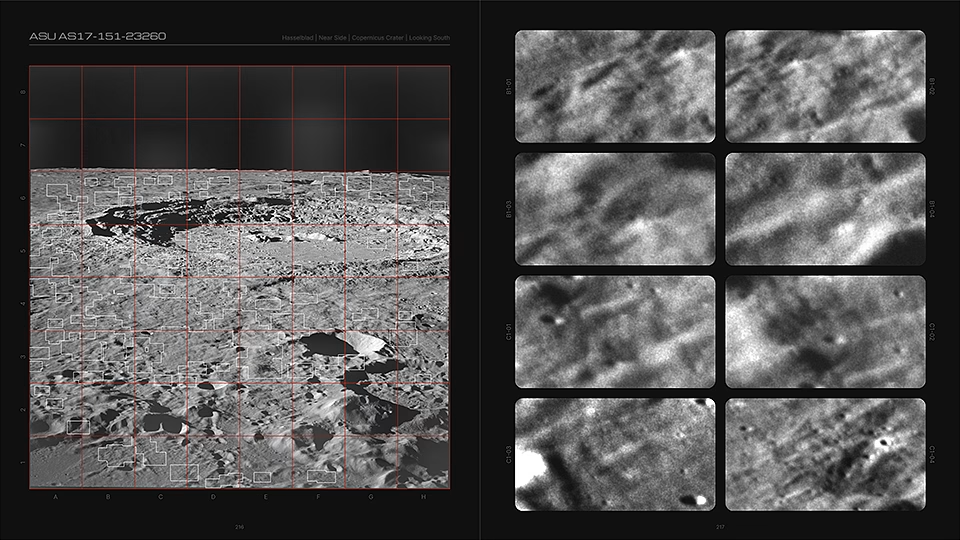
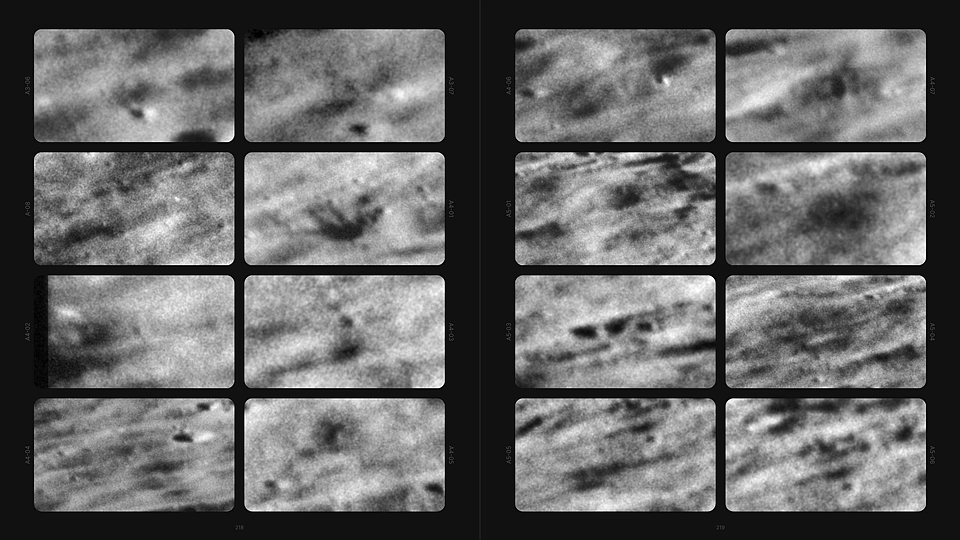
In the back half of the guide (Chapter 11), the analyst and enthusiast alike can apply their new identification and perception-enhancement skills to hundreds of AOI and OOI training images, ranging in difficulty from subtle to obvious. All of the training image anomalies shown were identified using the basic methods presented in the guide and are fully referenced to their original archive sources and frame numbers, inviting further independent, advanced analysis, discussion, and debate.
Chapter Overviews
The Exoarchaeologist’s Field Guide to Lunar Mission Photography unfolds across 11 chapters and more than 68 topic sections, covering everything from humanity’s long-standing view of the Moon as a world in its own right to all new structured methods for identifying and evaluating potential extraterrestrial artifacts in lunar mission imagery.
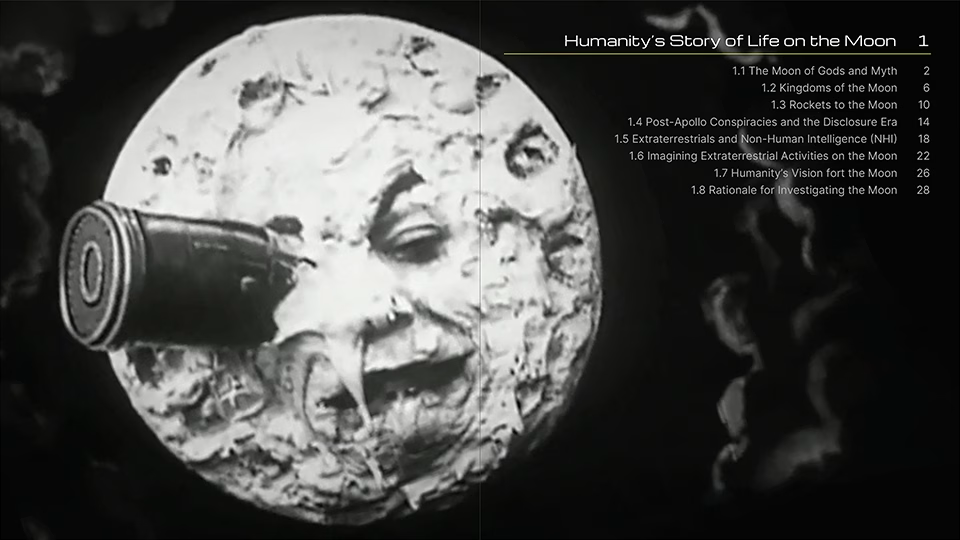
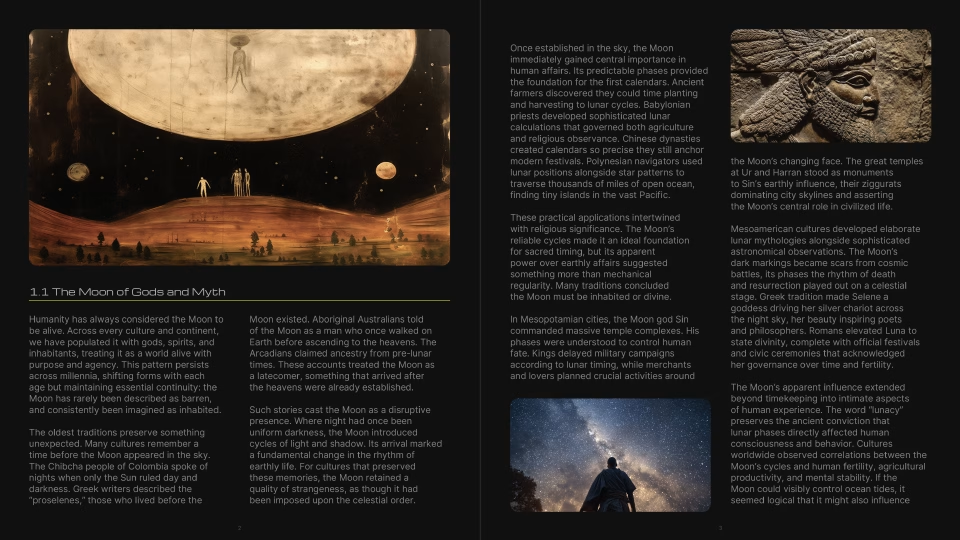
CHAPTER 1
Humanity’s Story of
Life on the Moon
1.1 The Moon of Gods and Myth
1.2 Kingdoms of the Moon
1.3 Rockets to the Moon
1.4 Post-Apollo Conspiracies and the Disclosure Era
1.5 Extraterrestrials and Non-Human Intelligence (NHI)
1.6 Imagining Extraterrestrial Activities on the Moon
1.7 Humanity’s Vision for the Moon
1.8 Rationale for Investigating the Moon
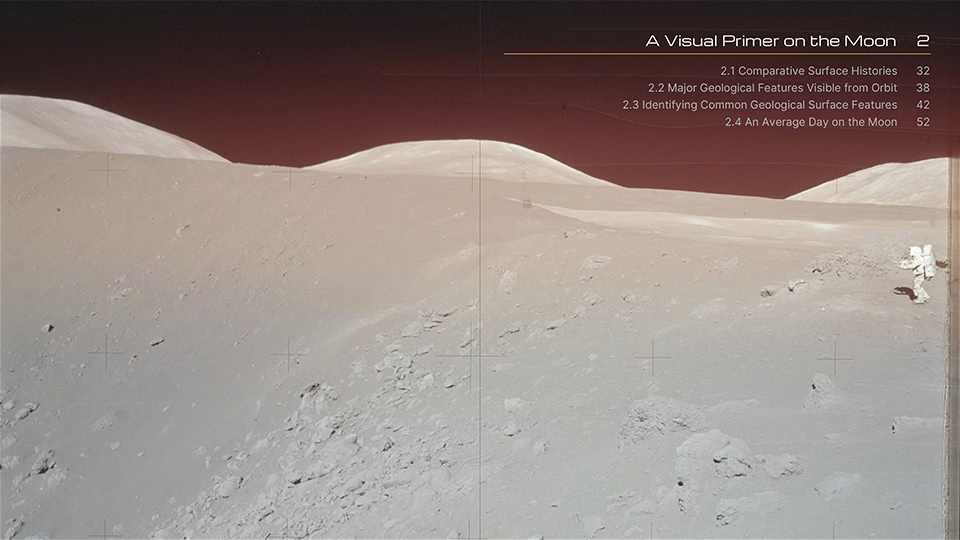
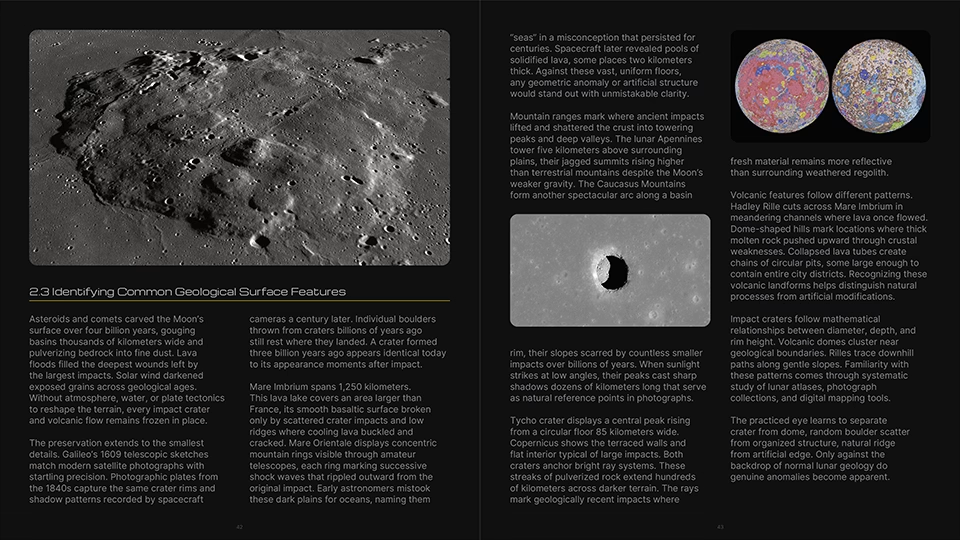
CHAPTER 2
A Visual Primer on
the Moon
2.1 Comparative Surface Histories
2.2 Major Geological Features Visible from Orbit
2.3 Identifying Common Geological Surface Features
2.4 An Average Day on the Moon
CHAPTER 3
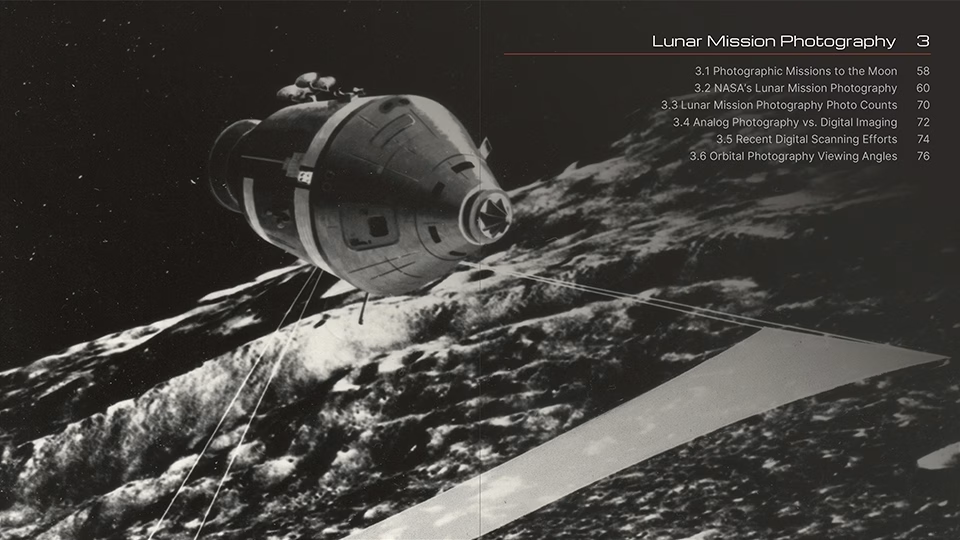
Lunar Mission Photography
3.1 Photographic Missions to the Moon
3.2 NASA’s Lunar Mission Photography
3.3 Lunar Mission Photography Photo Counts
3.4 Analog Photography vs. Digital Imaging
3.5 Recent Digital Scanning Efforts
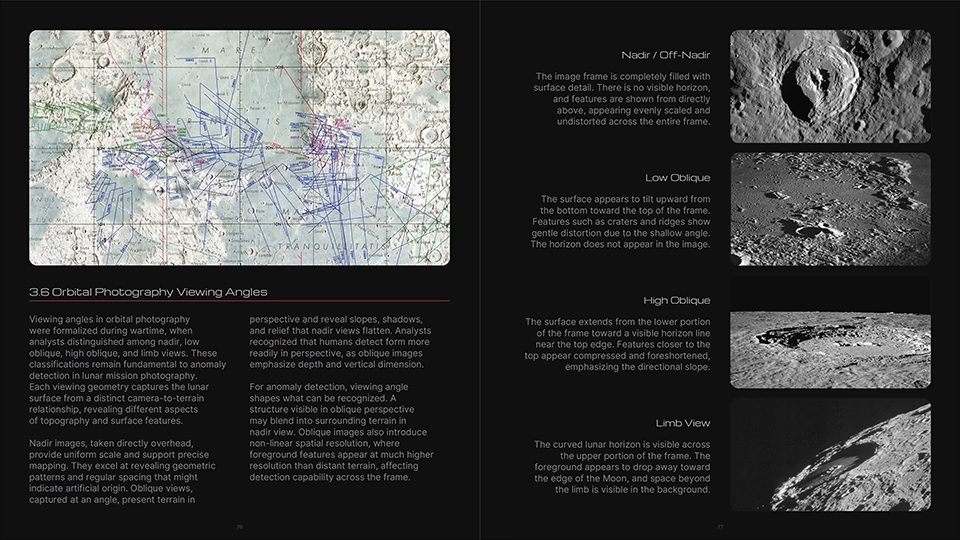
3.6 Orbital Photography Viewing Angles
CHAPTER 4
Getting Started in
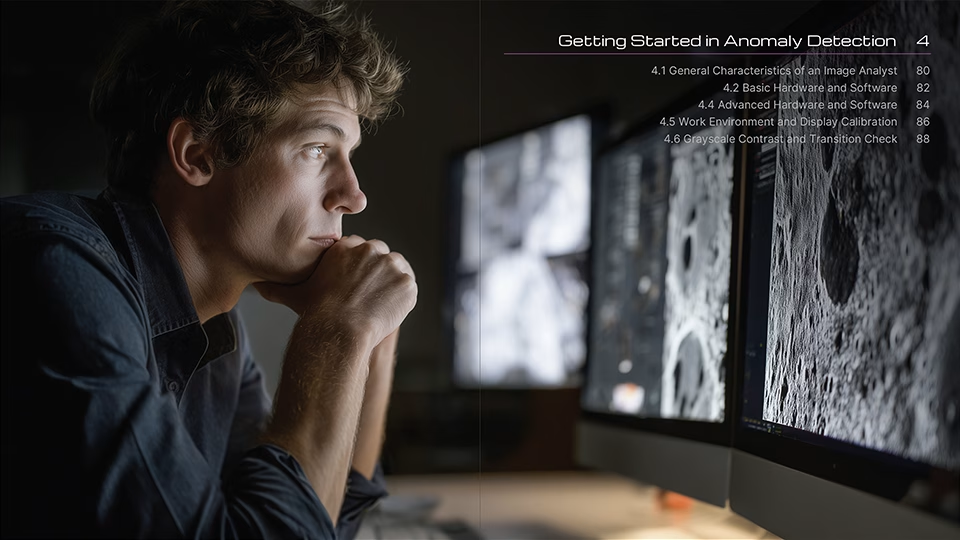
Anomaly Detection
4.1 General Characteristics of an Image Analyst
4.2 Basic Hardware and Software
4.3 Advanced Hardware and Software
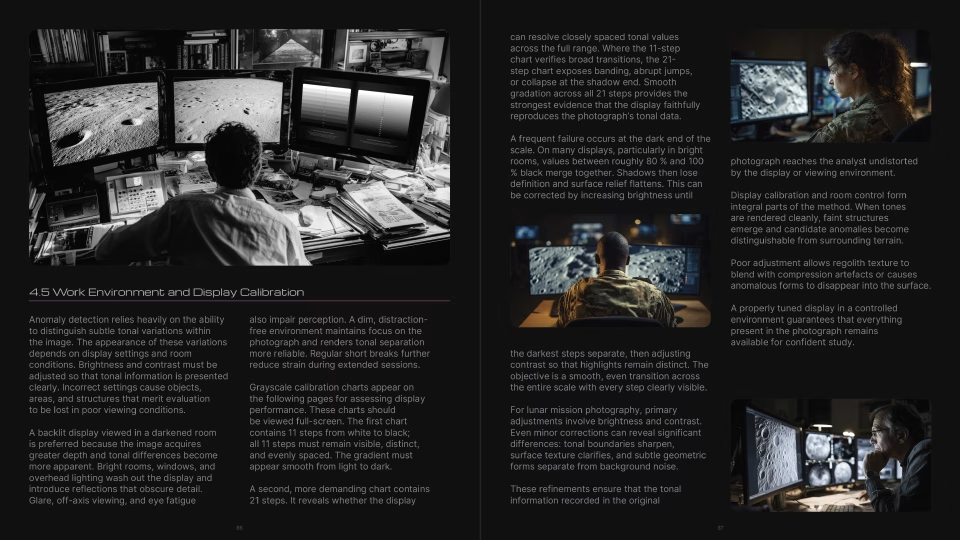
4.4 Work Environment and Display Calibration
4.5 Grayscale Contrast and Transition Check
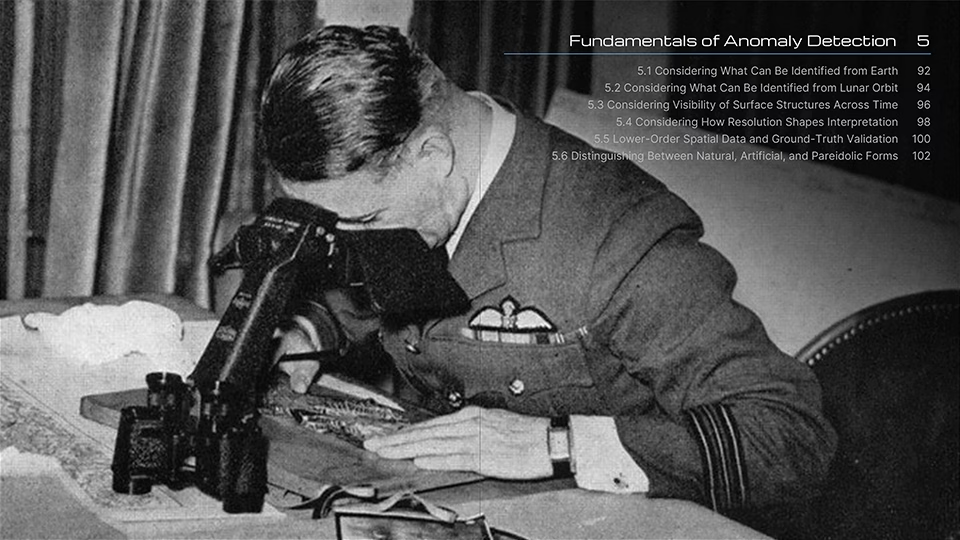
CHAPTER 5
Fundamentals of
Anomaly Detection
5.1 Considering What Can Be Identified from Earth
5.2 Considering What Can Be Identified from Lunar Orbit
5.3 Considering Visibility of Surface Structures Across Time
5.4 Considering How Resolution Shapes Interpretation
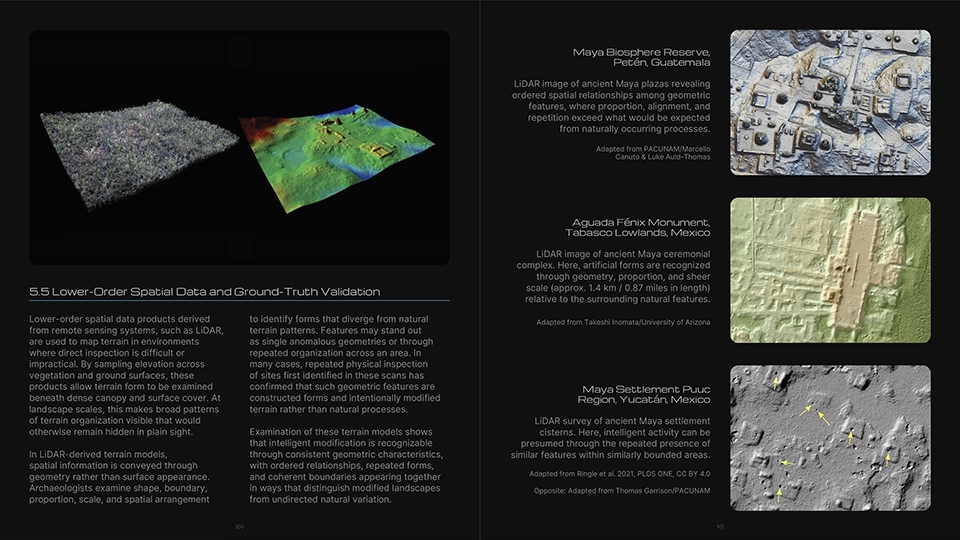
5.5 Lower-Order Spatial Data and Ground-Truth Validation
5.6 Distinguishing Between Natural, Artificial, and Pareidolic Forms
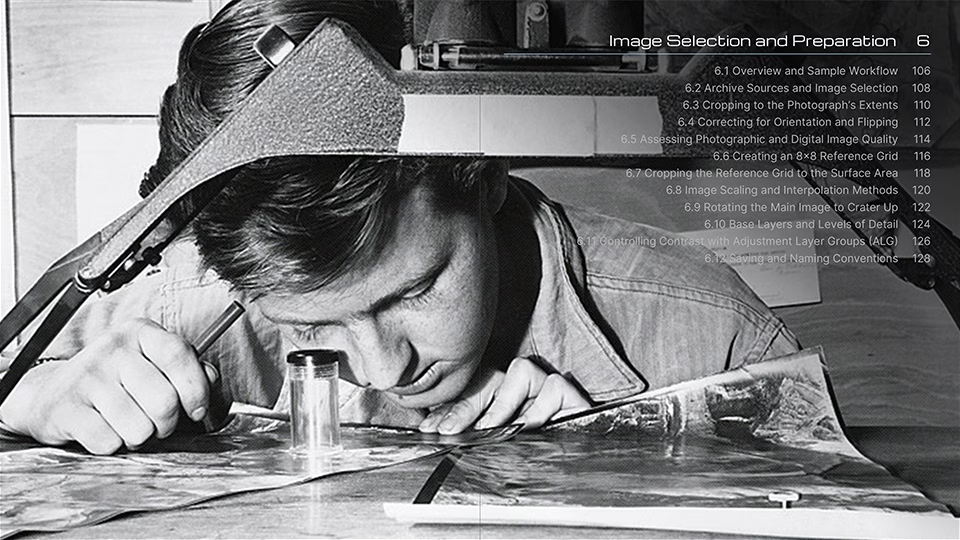
CHAPTER 6
Image Selection
and Preparation
6.1 Overview and Sample Workflow
6.2 Archive Sources and Image Selection
6.3 Cropping to the Photograph’s Extents
6.4 Correcting for Orientation and Flipping
6.5 Assessing Photographic and Digital Image Quality
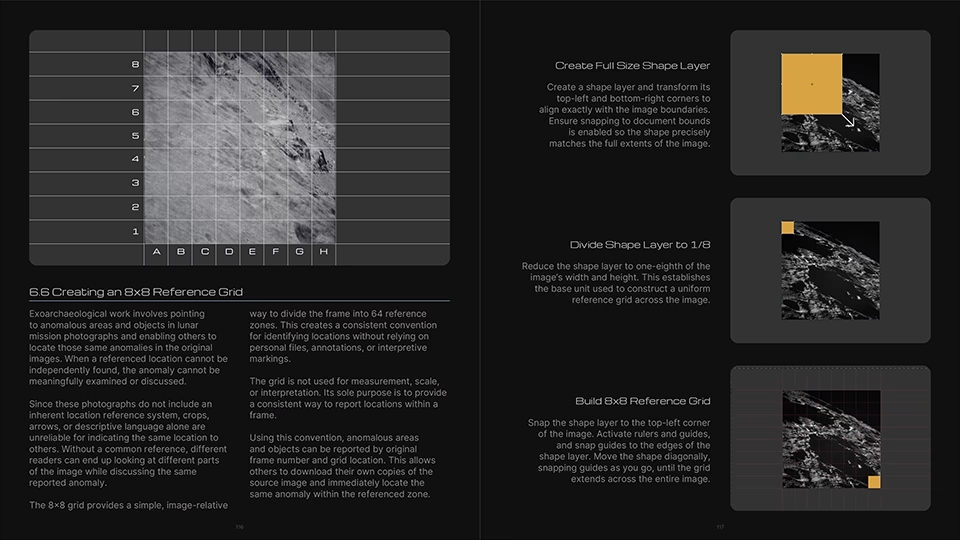
6.6 Creating an 8×8 Reference Grid
6.7 Cropping the Reference Grid to the Surface Area
6.8 Image Scaling and Interpolation Methods
6.9 Rotating the Main Image to Crater Up
6.10 Base Layers and Levels of Detail
6.11 Controlling Contrast with Adjustment Layer Groups (ALG)
6.12 Saving and Naming Conventions
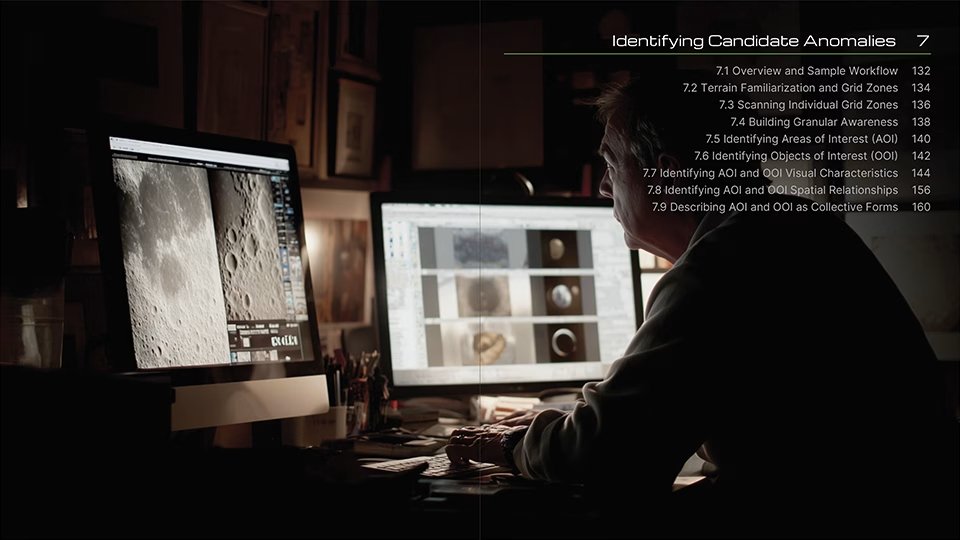
CHAPTER 7
Identifying Candidate Anomalies
7.1 Overview and Sample Workflow
7.2 Terrain Familiarization and Grid Zones
7.3 Scanning Individual Grid Zones
7.4 Building Granular Awareness
7.5 Identifying Areas of Interest (AOI)
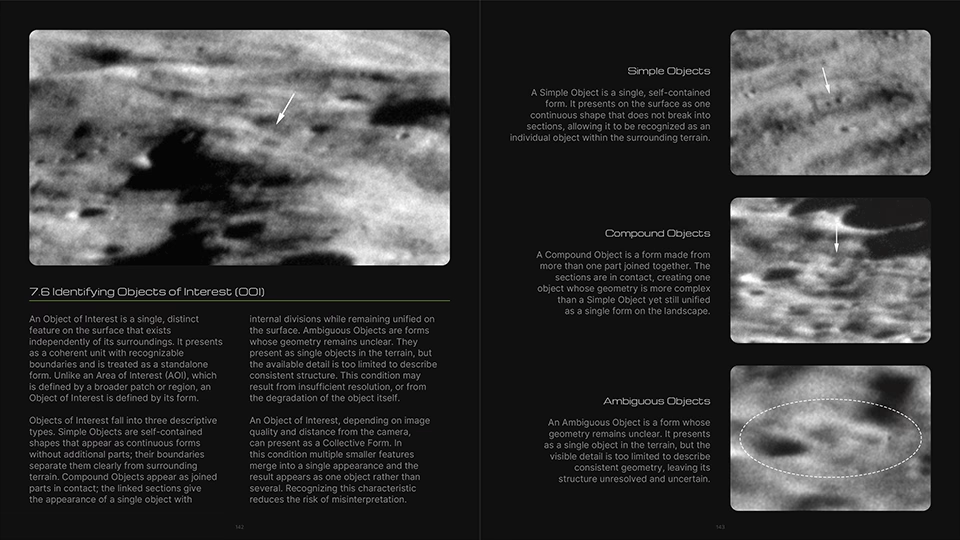
7.6 Identifying Objects of Interest (OOI)
7.7 Identifying AOI and OOI Visual Characteristics
7.8 Identifying AOI and OOI Spatial Relationships
7.9 Describing AOI and OOI as Collective Forms
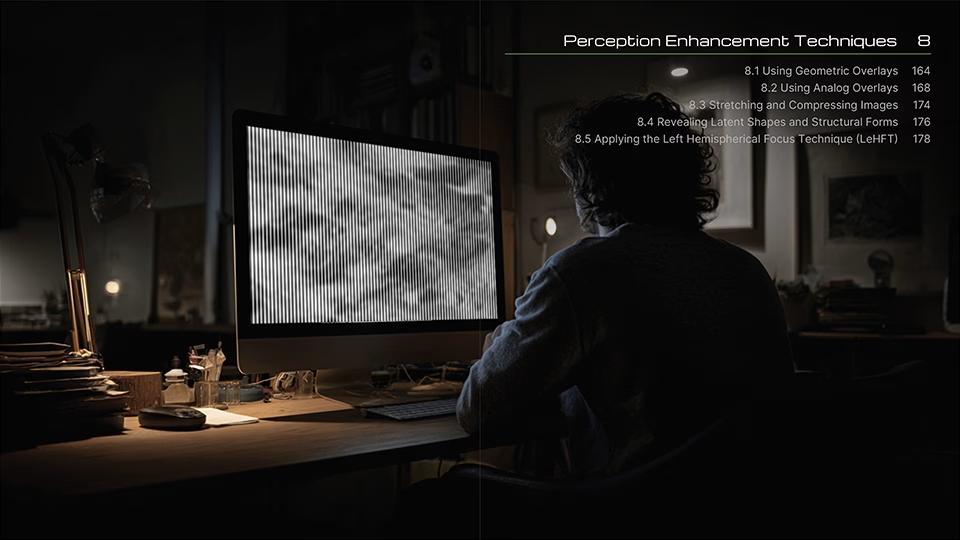
CHAPTER 8
Perception Enhancement Techniques
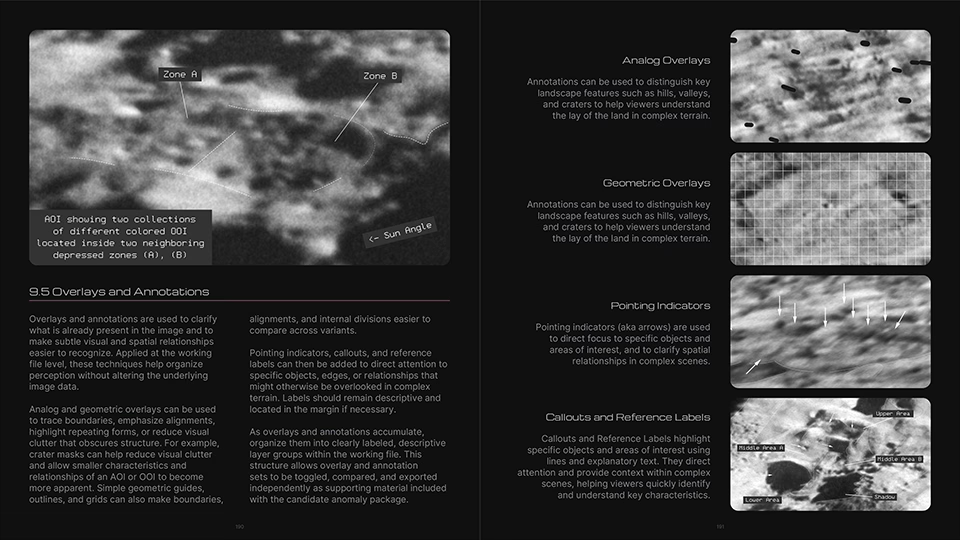
8.1 Using Geometric Overlays
8.2 Using Analog Overlays
8.3 Stretching and Compressing Images
8.4 Revealing Latent Shapes and Structural Forms
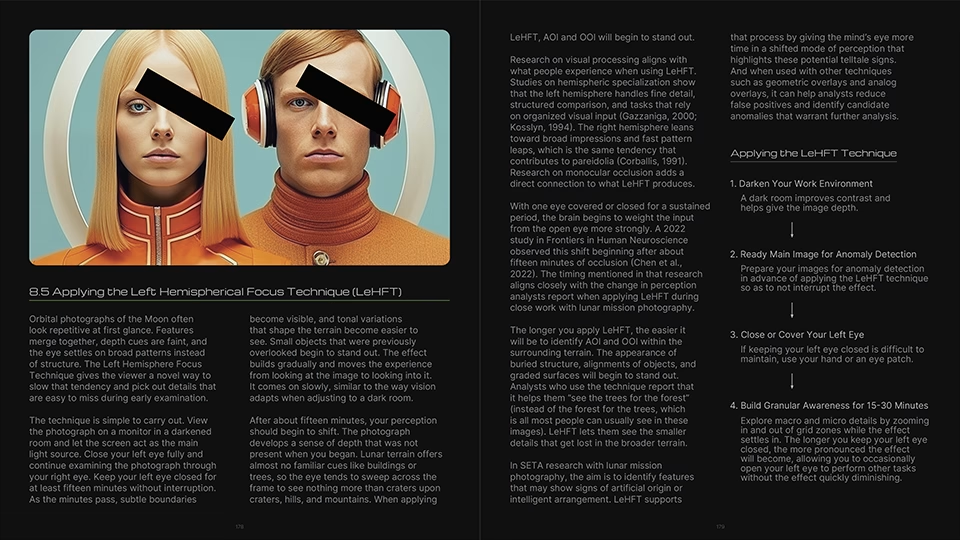
8.5 Applying the Left Hemispherical Focus Technique (LeHFT)
CHAPTER 9
Working with Candidate Anomalies
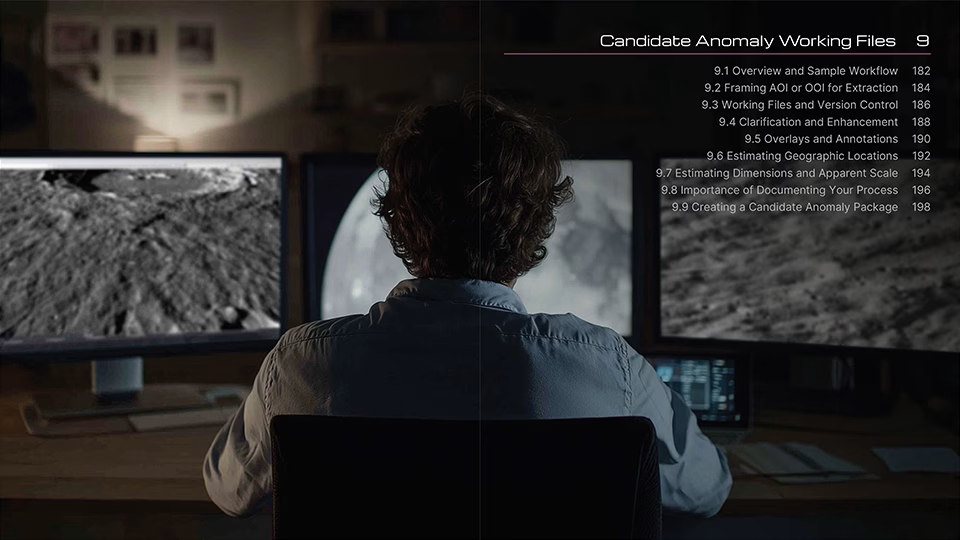
9.1 Overview and Sample Workflow
9.2 Framing AOI or OOI for Extraction
9.3 Working Files and Version Control
9.4 Clarification and Enhancement
9.5 Overlays and Annotations
9.6 Estimating Geographic Locations
9.7 Estimating Dimensions and Apparent Scale
9.8 Importance of Documenting Your Process
9.9 Creating a Candidate Anomaly Package


CHAPTER 10
Socializing Your Research
10.1 Becoming Your Own Worst Critic
10.2 Presenting Your Research on Social Media
10.3 Navigating Bad Actors
CHAPTER 11
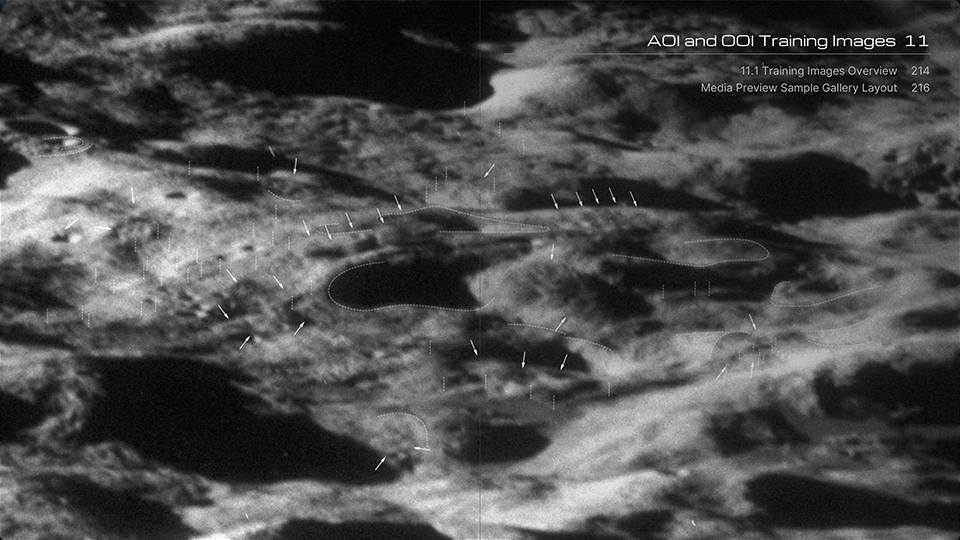
AOI and OOI Training Images
11.1 Training Images Overview
Training Images Gallery

Purchase and Download

The Exoarchaeologist’s Field Guide
to Lunar Mission Photography
By Allan Sturm
Whether you’re a hands-on researcher in the UAP/UFO space or a Moon-mystery enthusiast drawn to the possibility that extraterrestrials—often referred to as non-human intelligences (NHI)—visited Earth and the Moon in our past, this first-of-its-kind field guide teaches you a science-based approach to identifying geometric anomalies in lunar mission photography.
The field guide includes hundreds of fully sourced training images, ranging from subtle to striking, that highlight uniquely geometric, anomalous Areas of Interest (AOI) and Objects of Interest (OOI), allowing you to casually explore or to pursue further independent, advanced analysis, discussion, and debate.
Designed in Dark Mode for These Devices
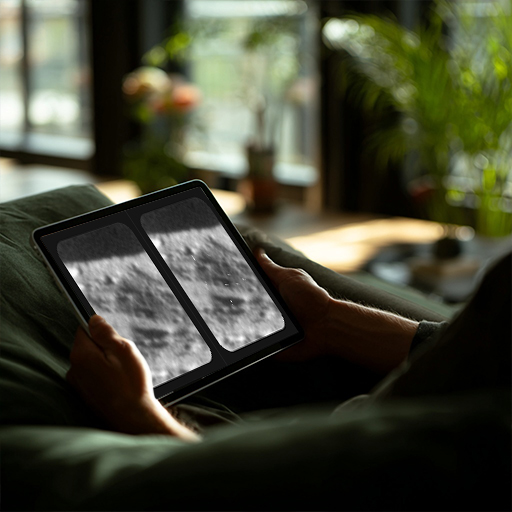
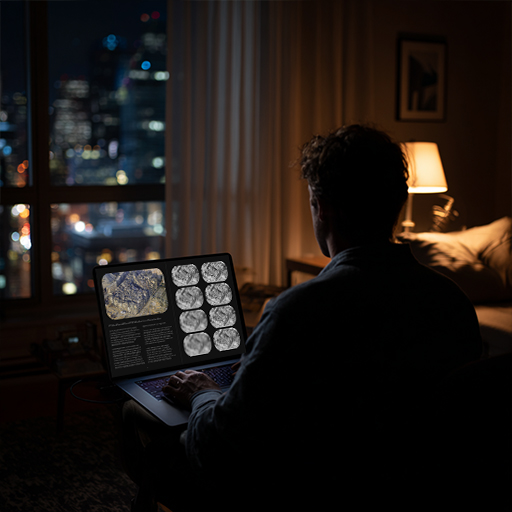
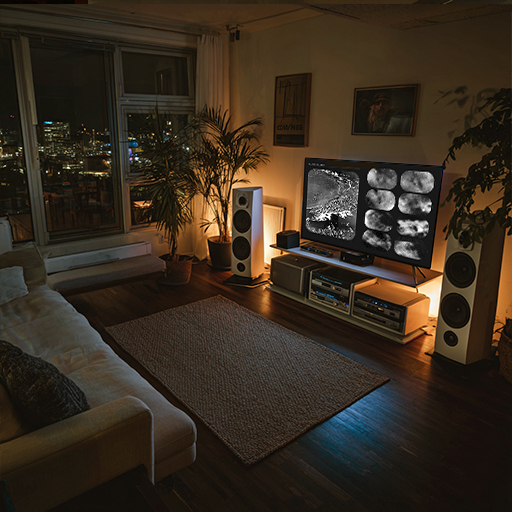
This is not an e-book. It is formatted in 16:9 HDTV layout and optimized for large tablet, laptop, desktop, and smart television viewing in a dark viewing environment to enhance clarity, contrast, and detail.
Large Tablets
Laptops

Desktops
Smart Televisions
Download Details
Purchase and download are simple — no membership required. A secure download link will be sent directly to your email. When the first edition of the field guide is updated, you’ll receive an email notification with a link to download the newest version at no additional cost. Looking for a media review copy? Visit the Contact page.
First Edition
English Language
(As of Feb 28, 2026)
311 Pages
11 Chapters
68 Topic Sections
422 Illustrations
590 Training Images
File Format
High-resolution PDF
Adobe Acrobat Compatible
Free Updates
The first edition will be updated
over time and updates to this
edition are included at no
additional cost. During purchase,
please opt into receiving update
notification emails.
HDTV Format
Large Tablets
Laptop Computers
Desktop Computers
Smart Televisions
* NOT for Smartphones *
US $29.95
First Edition, English

DATE
February 28th, 2026
March 7th, 2026
FIELD GUIDE UPDATE
Public Release, First Edition: English
Next planned update will include
additional training images.