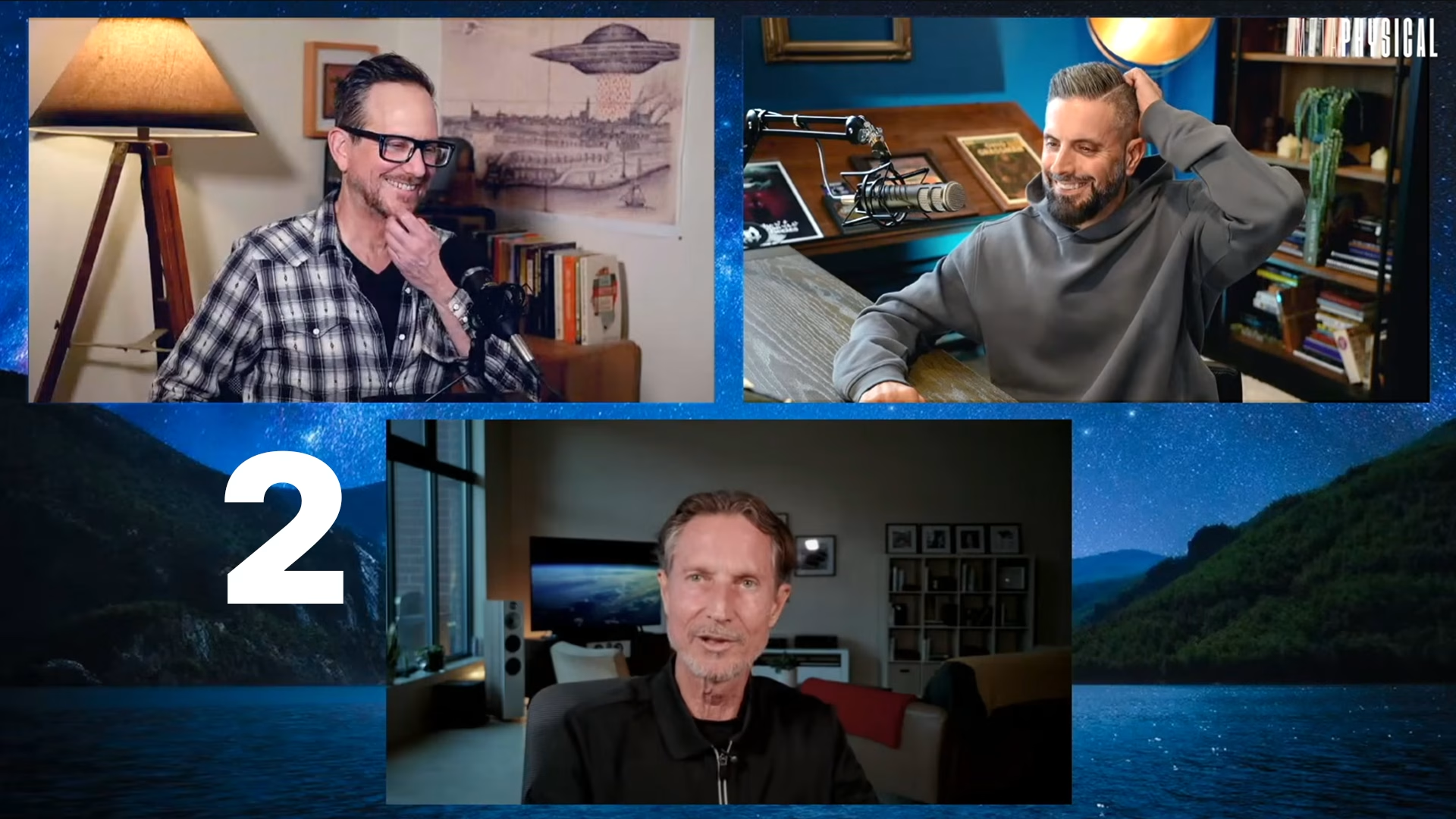
This video features investigative researcher Rob Counts and remote viewer John Vivanco interviewing professional photo analyst and author Allan Sturm. They explore Sturm’s methodology for identifying potentially artificial structures on the surface of the moon using techniques traditionally applied by military geospatial analysts.
Key Takeaways and Methodology
- Building Granular Awareness: Sturm emphasizes the importance of zooming in and out of images to develop situational awareness, rather than fixating on immediate interpretations (1:45-2:15).
- Crater Masking: A specific technique involving a transparency layer to “mask” craters, allowing the mind to focus on underlying terrain and anomalous shapes instead of being distracted by natural geological features (6:00-6:50).
- The “One Eye” Technique: Sturm suggests covering the left eye to prioritize the analytical side of the brain while examining lunar imagery, which can help reveal subtle details and geometric forms (24:15-27:50).
- Data Scrutiny: Sturm categorizes his findings into Areas of Interest (AOIs) and Objects of Interest (OOIs), avoiding speculative labels to ensure a more responsible and technical approach to anomaly detection (3:25-4:30).
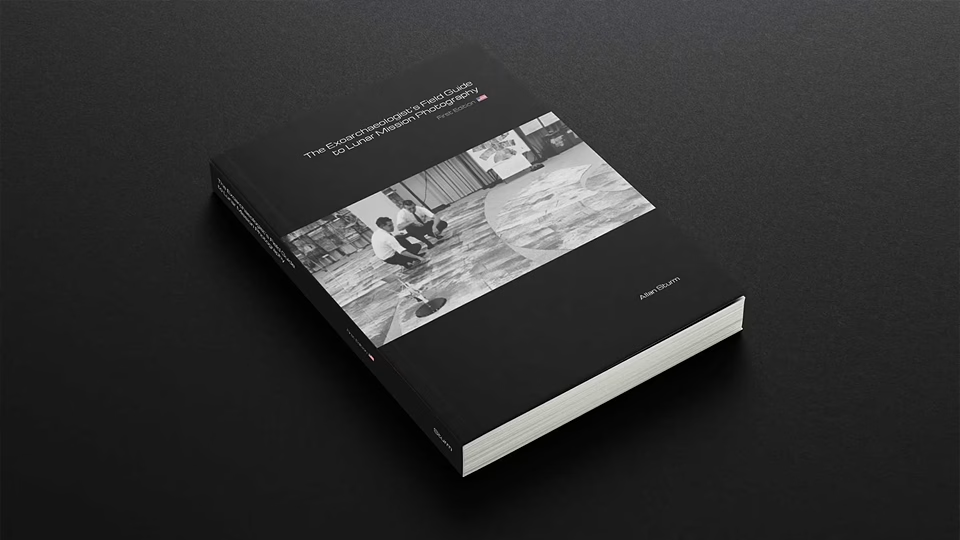
- Resource Material: Sturm discusses the significance of his book, The Exoarchaeologist’s Field Guide to Lunar Mission Photography, which serves as a living training manual for those interested in his process (19:20-22:00).
The “one eye” technique, as described by Allan Sturm, is a method for enhancing visual perception and focus when analyzing lunar imagery (24:15-27:50).
By covering the left eye and looking at the photographs exclusively with the right, the observer effectively:
- Tips the scales in favor of the analytical side of the brain: This forces the mind to move away from the right brain’s tendency to process images holistically, allowing for more detailed, granular scrutiny (26:00-27:00).
- Reduces cognitive distraction: It helps the brain overcome the tendency to “skip over” details or latch onto large, obvious features like craters, enabling the viewer to identify more subtle geometric shapes and textures (27:00-27:20).
- Builds situational awareness: When combined with zooming in and out, this technique helps the observer mentally map spatial relationships, such as how objects sit next to or within different areas of the terrain, eventually creating a “two-and-a-half-D” sense of depth (27:25-28:35).