WATCH NOW ON YOUTUBE -> SOMETHING IS ON THE MOON (PART 1)
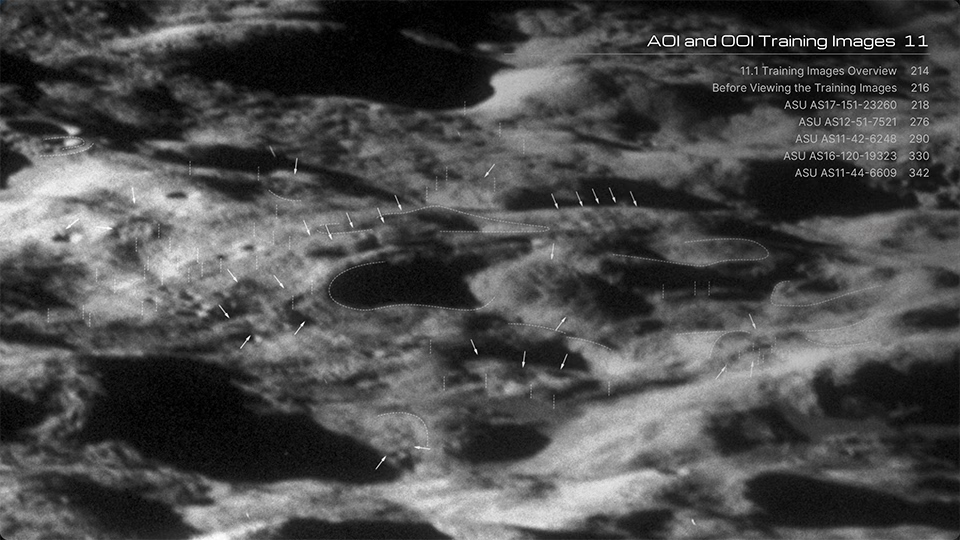
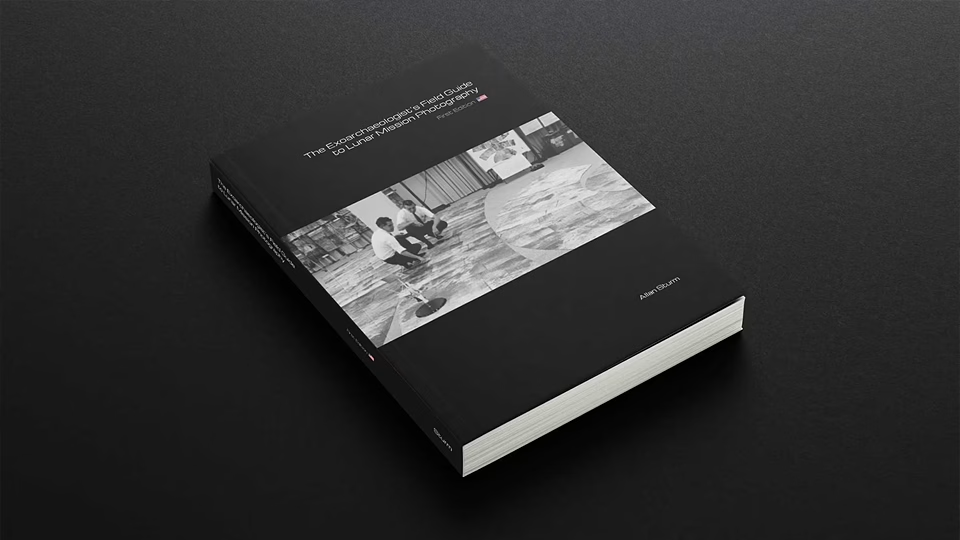
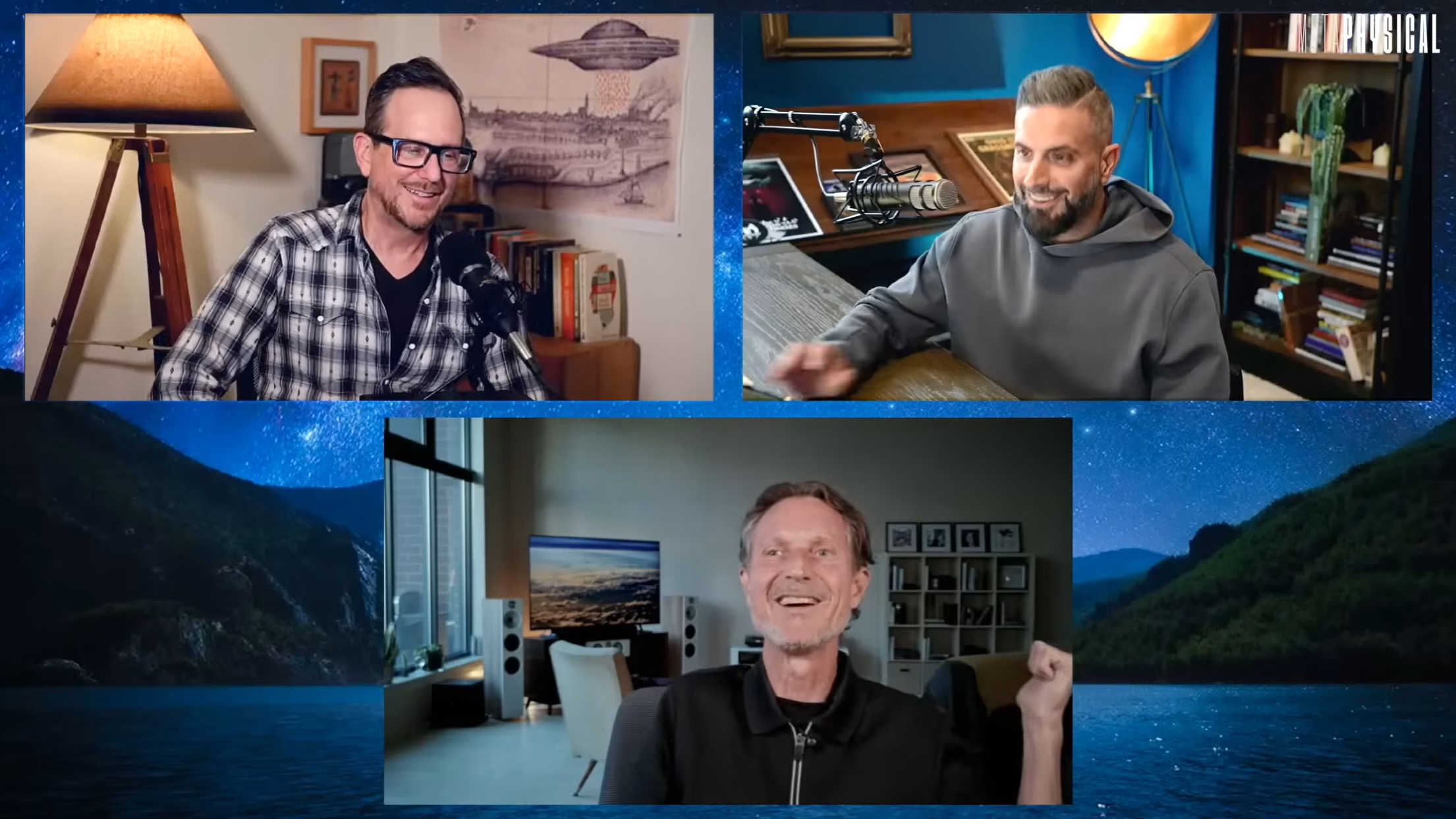
This video features an interview with Allan Sturm, a civilian photo analyst and author of The Exoarchaeologist’s Field Guide to Lunar Mission Photography (2026). The discussion centers on his professional-level work in identifying potential structures on the moon using public NASA archives (6:08-6:56).
Key takeaways from the interview include:
- Moving Beyond Conspiracy: Sturm explains that his approach is not rooted in belief or conspiracy theories, but in observational science and data integrity (12:52-13:02). He emphasizes that he is interested in what the data shows rather than forcing a narrative (12:54-13:02).
- The “Wagon Wheels” Discovery: Sturm discusses his breakthrough discovery, which he nicknamed “the wagon wheels” (13:03-13:20). He notes that once he identified these specific, non-natural shapes, he began applying similar rigorous techniques to other areas of lunar photography (14:38-14:45).
- Developing “Perception Hacks”: A significant part of the interview covers the techniques Sturm developed to view lunar photos more effectively. This involves overcoming “pareidolia” (the tendency to see familiar patterns in random data) by training the mind to recognize geometric relationships, such as lines and edges, rather than projecting expected shapes like buildings or airports onto the images (8:08-8:50, 41:29-42:04).
- Technical Proficiency: The hosts, Rob Counts and John Vivanco, highlight Sturm’s deep technical understanding of camera technology and photo editing (36:53-37:34). Sturm explains how he utilizes brightness, contrast, and high-resolution scans of original Hasselblad film to reduce visual noise and improve data interpretation (9:43-10:03, 35:55-36:23).
- Perspective Matters: Sturm distinguishes between different types of photography—Nadir (straight down) versus oblique angles—and explains why the latter can be more revealing for spotting objects that might otherwise be missed (28:55-29:25).
The conversation emphasizes that there is a “truth layer” between skepticism and fringe claims, where one can objectively examine lunar data for anomalies without needing to jump to conclusions (39:41-40:02).
Summary provided by Google AI