
A brand new refreshed 2026 version of ULOs: Unidentified Lunar Objects Revealed in NASA Photography is bundled with the The Exoarchaeologist’s Field Guide to Lunar Mission Photography!
If you already purchased the field guide, you should’ve received an update email that will let you download the new Zip file containing both books.
If you opted out of getting updates, just contact me with your name and I’ll pass you a copy of it!
Enjoy!
Category: Field Guide
-
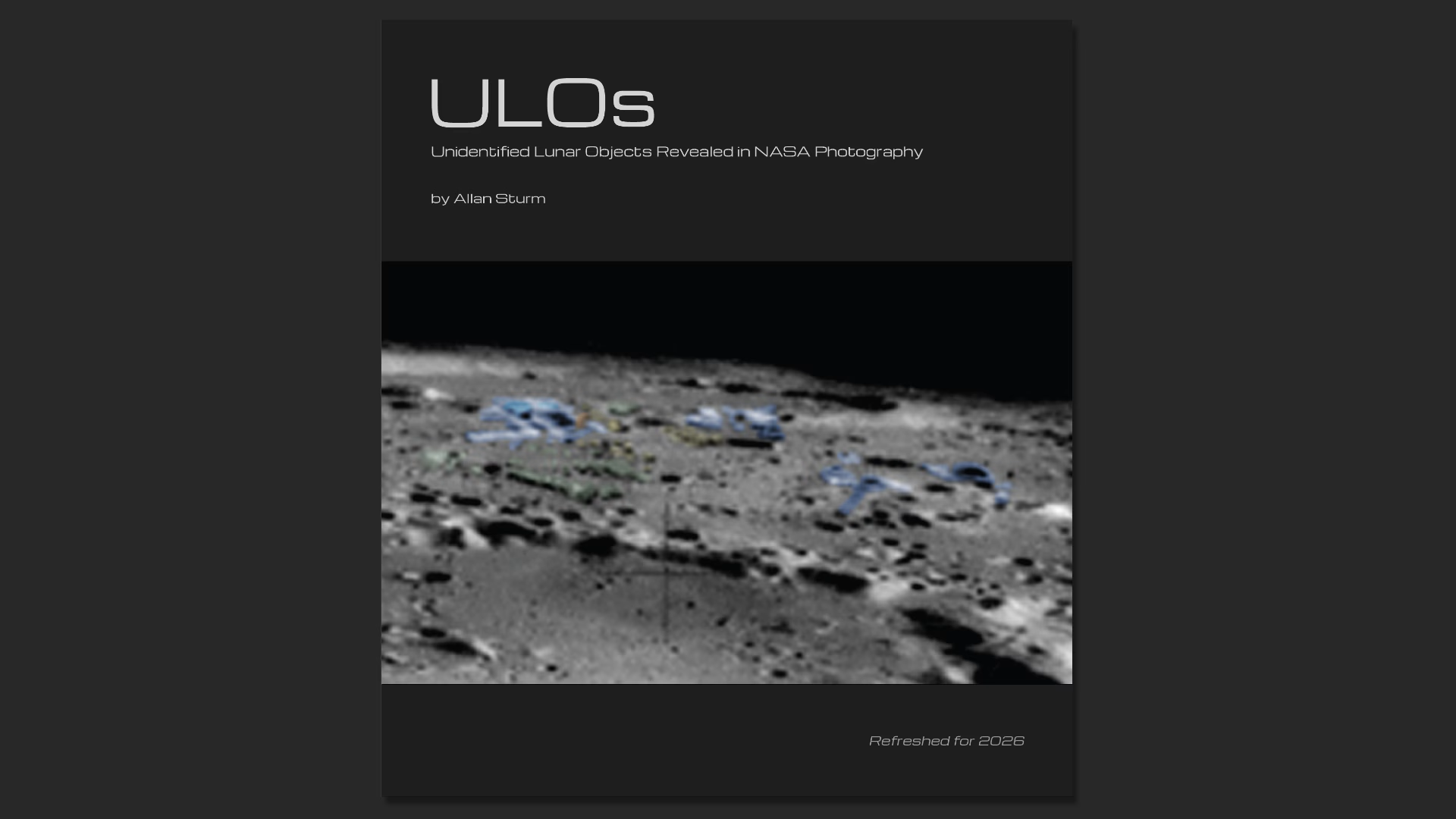
2026 Refresh of ULOs: Unidentified Lunar Objects Revealed in NASA Photography
-
Metaphysical Show Interview with Allan Sturm (Part 2: How to Find Things on the Moon)
This video features investigative researcher Rob Counts and remote viewer John Vivanco interviewing professional photo analyst and author Allan Sturm. They explore Sturm’s methodology for identifying potentially artificial structures on the surface of the moon using techniques traditionally applied by military geospatial analysts.
Key Takeaways and Methodology
- Building Granular Awareness: Sturm emphasizes the importance of zooming in and out of images to develop situational awareness, rather than fixating on immediate interpretations (1:45-2:15).
- Crater Masking: A specific technique involving a transparency layer to “mask” craters, allowing the mind to focus on underlying terrain and anomalous shapes instead of being distracted by natural geological features (6:00-6:50).
- The “One Eye” Technique: Sturm suggests covering the left eye to prioritize the analytical side of the brain while examining lunar imagery, which can help reveal subtle details and geometric forms (24:15-27:50).
- Data Scrutiny: Sturm categorizes his findings into Areas of Interest (AOIs) and Objects of Interest (OOIs), avoiding speculative labels to ensure a more responsible and technical approach to anomaly detection (3:25-4:30).
- Resource Material: Sturm discusses the significance of his book, The Exoarchaeologist’s Field Guide to Lunar Mission Photography, which serves as a living training manual for those interested in his process (19:20-22:00).
The “one eye” technique, as described by Allan Sturm, is a method for enhancing visual perception and focus when analyzing lunar imagery (24:15-27:50).
By covering the left eye and looking at the photographs exclusively with the right, the observer effectively:
- Tips the scales in favor of the analytical side of the brain: This forces the mind to move away from the right brain’s tendency to process images holistically, allowing for more detailed, granular scrutiny (26:00-27:00).
- Reduces cognitive distraction: It helps the brain overcome the tendency to “skip over” details or latch onto large, obvious features like craters, enabling the viewer to identify more subtle geometric shapes and textures (27:00-27:20).
- Builds situational awareness: When combined with zooming in and out, this technique helps the observer mentally map spatial relationships, such as how objects sit next to or within different areas of the terrain, eventually creating a “two-and-a-half-D” sense of depth (27:25-28:35).
-
Connecticut MUFON Presentation
Thank you Michael Panicello, State Director for Connecticut MUFON for the opportunity to present my research to your chapter on Saturday, June 6th, 2026. Looking forward to it!
-
Metaphysical Show Interview with Allan Sturm (Part 1: Something is on the Moon)
Watch Now on YouTube ->
This video features an interview with Allan Sturm, a civilian photo analyst and author of The Exoarchaeologist’s Field Guide to Lunar Mission Photography (2026). The discussion centers on his professional-level work in identifying potential structures on the moon using public NASA archives (6:08-6:56).Key takeaways from the interview include:
- Moving Beyond Conspiracy: Sturm explains that his approach is not rooted in belief or conspiracy theories, but in observational science and data integrity (12:52-13:02). He emphasizes that he is interested in what the data shows rather than forcing a narrative (12:54-13:02).
- The “Wagon Wheels” Discovery: Sturm discusses his breakthrough discovery, which he nicknamed “the wagon wheels” (13:03-13:20). He notes that once he identified these specific, non-natural shapes, he began applying similar rigorous techniques to other areas of lunar photography (14:38-14:45).
- Developing “Perception Hacks”: A significant part of the interview covers the techniques Sturm developed to view lunar photos more effectively. This involves overcoming “pareidolia” (the tendency to see familiar patterns in random data) by training the mind to recognize geometric relationships, such as lines and edges, rather than projecting expected shapes like buildings or airports onto the images (8:08-8:50, 41:29-42:04).
- Technical Proficiency: The hosts, Rob Counts and John Vivanco, highlight Sturm’s deep technical understanding of camera technology and photo editing (36:53-37:34). Sturm explains how he utilizes brightness, contrast, and high-resolution scans of original Hasselblad film to reduce visual noise and improve data interpretation (9:43-10:03, 35:55-36:23).
- Perspective Matters: Sturm distinguishes between different types of photography—Nadir (straight down) versus oblique angles—and explains why the latter can be more revealing for spotting objects that might otherwise be missed (28:55-29:25).
The conversation emphasizes that there is a “truth layer” between skepticism and fringe claims, where one can objectively examine lunar data for anomalies without needing to jump to conclusions (39:41-40:02).
-
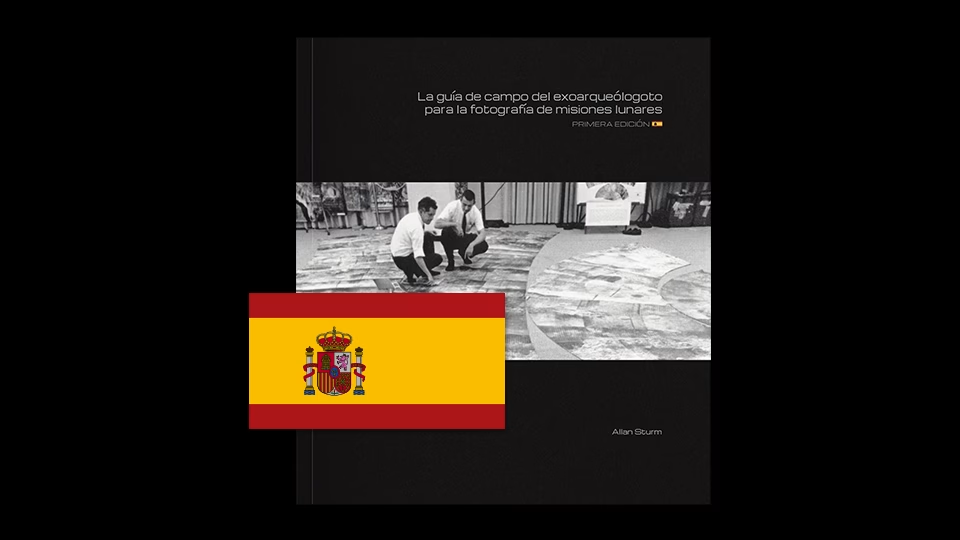
¡La Guía de campo del exoarqueólogo para la fotografía de misiones lunares estará disponible muy pronto!
La versión en español de la Guía de campo del exoarqueólogo para la fotografía en misiones lunares se encuentra en elaboración y debería estar disponible en abril de 2026. ¡Manténganse al tanto!
-
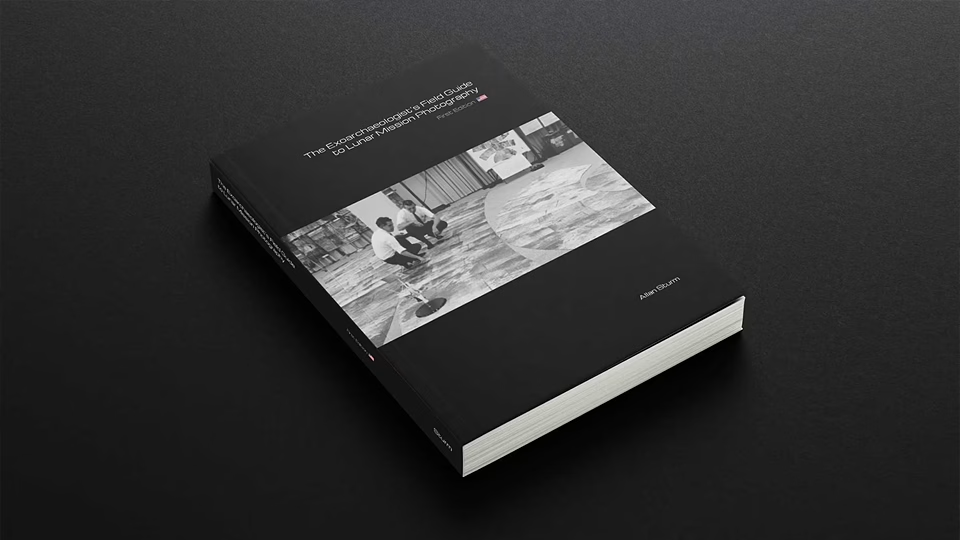
Free Updates
Anyone who purchases the first edition of the Exoarchaeologist’s field Guide to Lunar Mission Photography and opted in for product updates will automatically receive an update notification email to download the latest versions for free! If you opted out and want to download the current version, contact me with your Name and Order ID number and I’ll update your preferences.
-
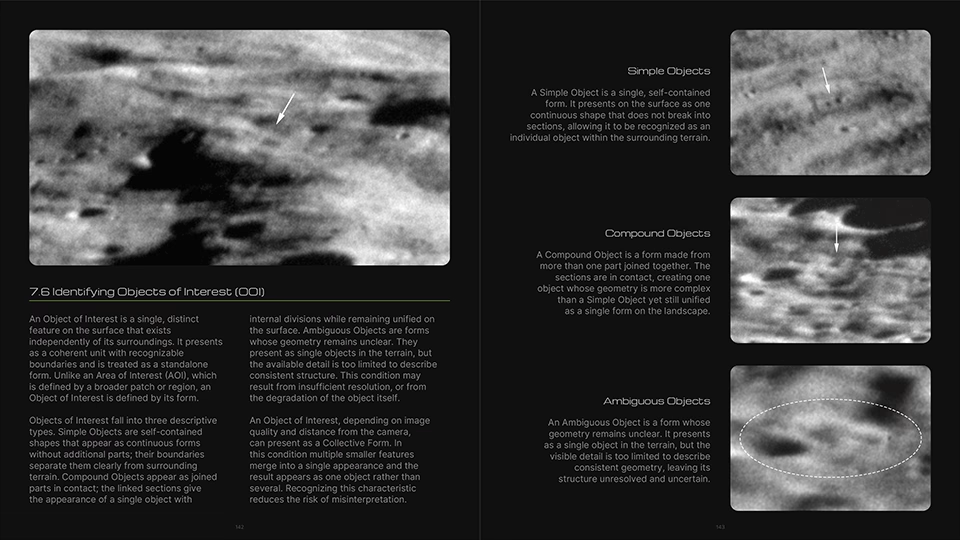
Minor but Meaningful Updates to the First Edition
Minor but meaningful updates to the blurb definitions of Areas of Interest (Amorphous AOI’s, Bounded AOI’s, Unbounded AOI’s) and Objects of Interest (Simple OOIs, Compound OOIs, Ambiguous OOI’s). This is a silent update and all new downloads will include these changes. Feel free to visit your download email link to download this update before any future update notifications.
-
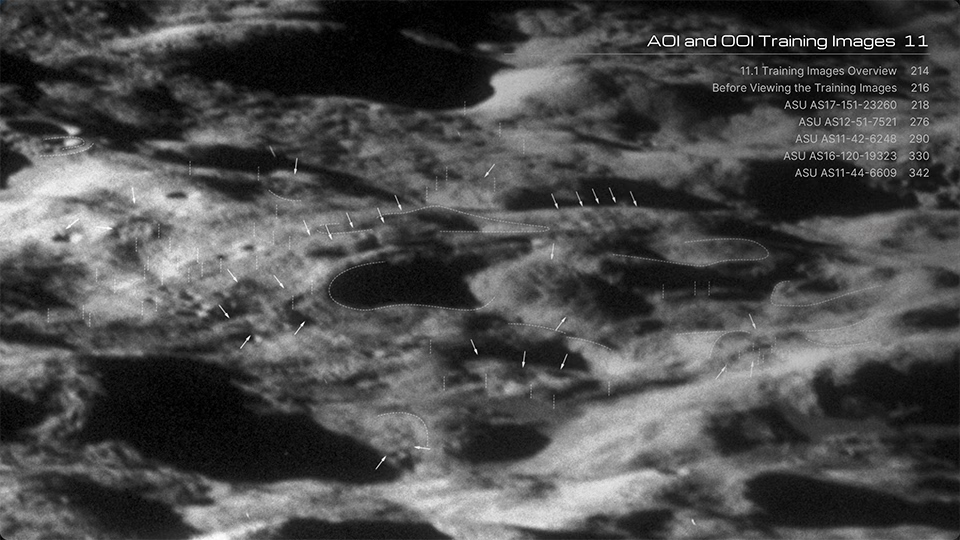
Major Field Guide Update to Chapter 11 Training Images
Major update! Added 170 new, fully annotated training images to Chapter 11, bringing the total number of training images to 341. Check your email for an update notification to download the current version for free!
-
Interview with Allan Sturm on Metaphysical Show
Filmed with John Vivanco and Rob Banks for their -> Metaphysical YouTube channel for three hours! Episode is planned to air on April 2nd, 2026.
-
Chapter 11, AOI and OOI Training Images Update
FIELD GUIDE UPDATE: Chapter 11, AOI and OOI Training Images have been overhauled with larger, annotated training images. Some of the previous training images have been removed and will be included in future updates of the field guide.